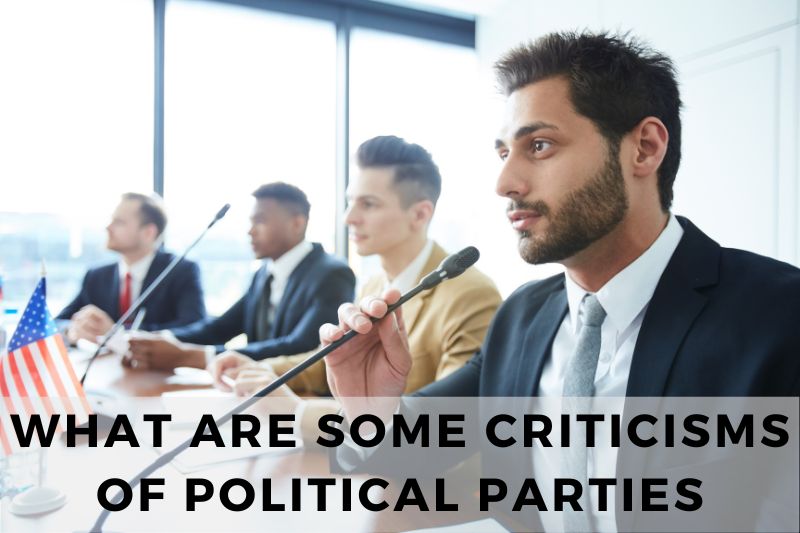
Political parties are fundamental components of democratic systems worldwide. They serve as vehicles for citizens to engage in the political process, offering platforms for representation and policy advocacy. However, they are not immune to criticism.
In this article, we will analyze the common criticisms of political parties in democracies. These critiques shed light on challenges facing modern political systems and prompt discussions on potential reforms.
Common Criticisms of Political Parties in Democracies
#1. Lack of Ideological Clarity
One of the common problems with political parties and a common criticism directed towards political parties in democracies is their lack of clear ideological stances. Rather than adhering to consistent principles, parties often resort to ideological flexibility in an attempt to broaden their appeal to a wider voter base. This shiftiness in ideological positions can lead to confusion among voters, who may find it challenging to discern the true convictions of a party. Consequently, this ambiguity erodes trust in the political process, as citizens become skeptical of the sincerity of party platforms and promises.
#2. Elite Capture and Oligarchy
Another significant criticism leveled against political parties is their susceptibility to elite capture and oligarchy. In many cases, a small faction of wealthy individuals or influential elites wields disproportionate power within the party structure. This elite capture enables them to shape party decisions and policy agendas to align with their own interests, often at the expense of the broader populace.
As a result, policies may be enacted that primarily benefit the elite few, exacerbating socioeconomic inequality and marginalization of underprivileged communities. The prevalence of oligarchic tendencies within political parties undermines the democratic ideal of equal representation and amplifies concerns about the influence of money in politics.
#3. Polarization and Partisan Gridlock
High levels of polarization and partisan gridlock are recurrent criticisms faced by political parties in democratic systems. In environments characterized by deep ideological divisions, parties prioritize maintaining ideological purity over seeking common ground and compromise.
This entrenched polarization impedes the legislative process, resulting in gridlock and the inability to address pressing societal challenges. As parties dig in their heels and refuse to cooperate across party lines, governance becomes increasingly ineffective, leaving critical issues unresolved and exacerbating public frustration with the political establishment.
#4. Insularity and Disconnect from the Public
Critics often point out the tendency of political parties to become insular and disconnected from the concerns of the general public. Instead of actively engaging with constituents and responding to their needs, parties may become preoccupied with internal dynamics and catering to the interests of party elites.
This disconnect between political leaders and ordinary citizens erodes trust in the representational function of parties and fosters a sense of alienation among the electorate. When parties prioritize internal cohesion over responsiveness to public demands, they risk undermining the foundational principles of democratic governance.
#5. Influence of Money and Special Interests
The pervasive influence of money and special interests in politics is a pressing concern that draws significant criticism towards political parties. Critics argue that parties often prioritize the interests of wealthy donors and powerful interest groups over the broader public good. As a result, policy agendas may be shaped to align with the preferences of these influential entities, sidelining the needs of ordinary citizens.
The disproportionate influence of money in politics undermines the democratic principle of equal representation and raises questions about the integrity of the political process. This influence not only distorts policy priorities but also reinforces perceptions of political favoritism and corruption, eroding public trust in the fairness and efficacy of democratic governance.
#6. Lack of Internal Democracy
Critics often highlight the lack of internal democracy within political parties as a significant concern. Despite espousing democratic values externally, parties may operate in an undemocratic manner internally, with decision-making processes dominated by party elites or central leadership.
This lack of internal democracy diminishes opportunities for grassroots participation and stifles dissent within the party ranks. As a result, party members may feel disenfranchised and dis-empowered, leading to decreased enthusiasm and engagement among the party base.
#7. Short-term Focus and Populism
Political parties frequently face criticism for their short-term focus and tendency towards populism. In pursuit of electoral success, parties may prioritize short-term gains over long-term planning and policy coherence. This focus on immediate electoral victories can lead to the adoption of populist rhetoric and policies aimed at appealing to popular sentiment rather than addressing underlying systemic challenges. Consequently, parties may neglect complex issues in favor of simplistic solutions that resonate with the electorate in the short term but fail to provide sustainable solutions in the long run.
#8. Entrenchment of Power
The entrenchment of power within political parties is a contentious issue that critics often highlight. Over time, parties may become entrenched in power, dominating the political landscape and stifling competition from alternative voices.
This concentration of power can undermine democratic pluralism and foster a sense of political stagnation, as entrenched parties resist meaningful reform and perpetuate their dominance through various institutional mechanisms. As a result, citizens may feel disillusioned with the political process, perceiving it as unresponsive and resistant to change.
#9. Failure to Address Complex Issues
Political parties frequently face criticism for their failure to address complex societal issues adequately. In the pursuit of electoral success, parties may prioritize simplistic solutions to complex problems, avoiding nuanced discussions that require difficult trade-offs and compromises.
This tendency to oversimplify complex issues can lead to policy prescriptions that lack depth and fail to adequately address the underlying root causes of societal challenges. As a result, critical issues such as climate change, income inequality, and healthcare reform may remain unaddressed or inadequately tackled, perpetuating systemic injustices and exacerbating social divisions.
#10. Ineffective Representation
Critics often argue that political parties fail to provide effective representation for all segments of society. Despite professing to represent diverse interests and viewpoints, parties may prioritize the concerns of certain demographic groups or elite constituencies over others. This selective representation can lead to the marginalization of minority voices and exacerbate existing inequalities within society.
Additionally, parties may neglect to adequately represent underprivileged or marginalized communities, further perpetuating systemic disparities in political power and influence. As a result, segments of the population may feel alienated from the political process, leading to feelings of disempowerment and disenchantment with democratic institutions.
Closing Thoughts
In conclusion, the criticisms leveled against political parties in democracies shed light on the complex challenges facing modern political systems. From the lack of ideological clarity to the influence of money and special interests, these criticisms highlight the need for critical evaluation and potential reforms within party structures.
Addressing these criticisms is essential for strengthening democratic governance and restoring trust in political institutions. By engaging in constructive dialogue and advocating for meaningful change, citizens can contribute to the evolution of political parties that are more responsive, inclusive, and accountable to the diverse needs of society.