Political parties play a pivotal role in democratic societies, serving as vehicles for collective action and representation. However, their impact is not always positive. In this article, we’ll delve into the negative effects of political parties, exploring how they contribute to polarization, gridlock, and erode public trust.
By understanding these dynamics, we can better grasp the challenges facing modern democracies and seek avenues for improvement. Let’s dissect the complexities of political party influence without embellishment or ambiguity.
The Negative Effects of Political Parties
#1. Polarization
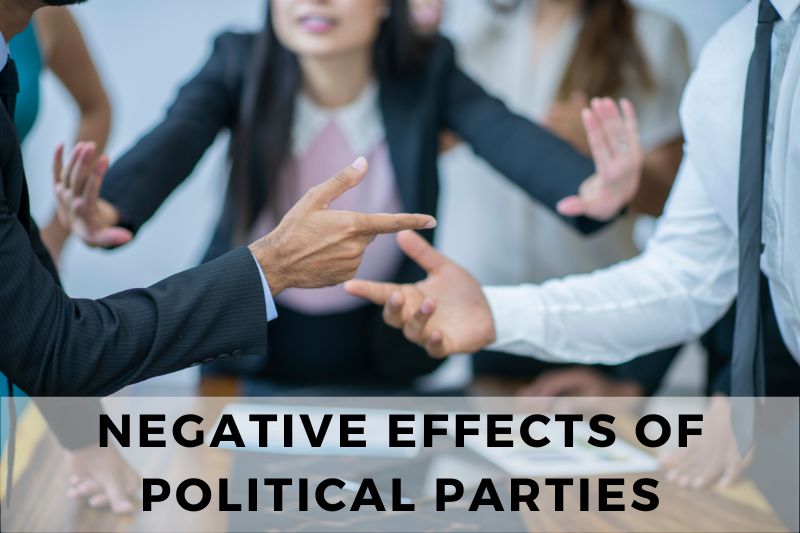
Political parties often cultivate an environment of polarization, where ideological differences are amplified for partisan gain. This divisive atmosphere hampers constructive discourse and inhibits collaboration on crucial issues. Citizens become entrenched in their respective camps, leading to increased hostility and a lack of willingness to compromise. As polarization intensifies, the middle ground diminishes, exacerbating societal divides and hindering progress.
#2. Partisan Gridlock
Partisan gridlock occurs when political parties prioritize ideological agendas over the common good, resulting in legislative stalemates and policy paralysis. Competing interests and uncompromising stances prevent effective governance, impeding the implementation of necessary reforms. Gridlock fosters frustration among citizens, eroding confidence in the political system and undermining democratic principles.
#3. Erosion of Public Trust
Political parties play a central role in shaping public perceptions of government integrity and accountability. However, when parties prioritize self-interest over the public good, trust in democratic institutions erodes. Scandals, corruption, and broken promises further erode public trust, leading to disillusionment and disengagement among voters. Without trust, the foundation of democracy weakens, jeopardizing its legitimacy. This is a classic example of how political parties hinder democracy.
#4. Limited Choice
In many political systems, the dominance of established parties limits the diversity of political options available to voters. Smaller parties struggle to compete against well-funded and entrenched rivals, leading to a lack of meaningful choice for voters. Limited options constrain democratic expression and undermine the principle of representation, as marginalized voices are sidelined in the electoral process.
#5. Corruption
The pursuit of power and influence within political parties can create fertile ground for corruption to flourish. Party leaders may prioritize loyalty over merit, leading to the appointment of unqualified individuals to positions of authority. Cronyism, nepotism, and backroom deals undermine transparency and accountability, corroding public trust in the political process. Corruption within parties perpetuates a culture of impunity, where ethical breaches go unchecked and undermine democratic norms.
#6. Clientelism
Clientelism, or the exchange of goods and services for political support, is a common practice within political parties. This system perpetuates dependency among constituents, who rely on party elites for access to resources and opportunities. Clientelistic networks prioritize loyalty over merit, distorting democratic processes and perpetuating inequality. By fostering a culture of patronage, political parties undermine the principles of equality and fairness, perpetuating social divisions and undermining the integrity of the political system.
#7. Stifling Innovation
The hierarchical nature of political parties can stifle innovation and creativity within the political landscape. Party elites may resist change to maintain their grip on power, inhibiting the emergence of new ideas and approaches. This reluctance to adapt can impede progress and hinder the implementation of effective policies to address contemporary challenges. Stagnation within political parties limits the ability of governments to respond dynamically to evolving societal needs, jeopardizing the long-term viability of democratic governance.
#8. Us vs. Them Mentality
Political parties often foster an “us vs. them” mentality, pitting supporters against perceived adversaries. This adversarial mindset reinforces divisions within society and undermines efforts to foster unity and cooperation. By framing political discourse in terms of opposition and conflict, parties perpetuate animosity and hinder efforts to find common ground. The entrenched nature of this mentality can impede collaboration and hinder progress on shared goals, perpetuating a cycle of polarization and hostility.
#9. Influence of Special Interests
Political parties frequently succumb to the influence of special interests, such as corporations, unions, and advocacy groups. These entities wield significant financial resources and lobbying power, shaping policy agendas to align with their interests. As a result, the needs of the general public may be overshadowed by the priorities of influential stakeholders. The disproportionate influence of special interests undermines the democratic principle of equal representation and erodes public confidence in the integrity of the political process.
#10. Gerrymandering
Gerrymandering, the manipulation of electoral district boundaries for partisan advantage, undermines the fairness and integrity of elections. Political parties often engage in gerrymandering to consolidate power by drawing district lines that favor their candidates. This practice distorts electoral outcomes, disenfranchises voters, and undermines the principle of one person, one vote. Gerrymandering perpetuates partisan dominance and stifles competition, eroding trust in the electoral process and diminishing democratic legitimacy.
#11. Factionalism
Factionalism within political parties often arises from competing interests and power struggles among party members. Infighting and discord can weaken party cohesion and distract from collective goals, leading to dysfunction and inefficiency. Factional disputes may result in divisive primaries, damaging party unity and diminishing electoral prospects. The prevalence of factionalism undermines party discipline and cohesion, hindering effective governance and eroding public confidence in political institutions.
#12. Undermining Democratic Processes
Political parties can undermine democratic processes by subverting electoral rules and norms to maintain power. Tactics such as voter suppression, misinformation campaigns, and manipulation of media coverage can distort public opinion and influence election outcomes. When parties prioritize winning at all costs over the integrity of the electoral process, democracy itself is threatened. The erosion of democratic processes undermines the legitimacy of elected officials and erodes public trust in the fairness and transparency of elections.
#13. Stagnation
The entrenched nature of political parties can lead to stagnation in governance, as entrenched interests prioritize maintaining the status quo over enacting meaningful reforms. Party leaders may resist change to protect their power and privilege, inhibiting progress and innovation. Stagnation stifles dynamic policy making and hampers efforts to address pressing societal challenges. Without the impetus for change, political systems risk becoming obsolete and unresponsive to the needs of citizens, perpetuating dissatisfaction and disillusionment.
#14. Identity Politics
Political parties often exploit identity-based divisions to mobilize support and secure electoral victories. By appealing to voters’ identities based on race, ethnicity, religion, or other characteristics, parties can deepen societal divisions and foster resentment among different groups. Identity politics prioritize group interests over common goals, undermining efforts to promote unity and inclusivity. The manipulation of identity for political gain perpetuates social tensions and hinders progress towards a more cohesive and equitable society.
#15. Global Instability
The actions and decisions of political parties within individual countries can have far-reaching implications for global stability. International relations are shaped by the policies and priorities of governments, which are often influenced by partisan considerations. Disputes between political parties can escalate into conflicts, trade disputes, or diplomatic tensions, destabilizing regions and undermining international cooperation. The impact of political party dynamics extends beyond national borders, highlighting the connections in global politics and the importance of responsible governance.
Closing Thoughts
Political parties wield significant influence in shaping the course of democratic societies, yet their impact is not always positive. From polarization and gridlock to corruption and identity politics, the negative effects of political parties are manifold and far-reaching.
Addressing these challenges requires a concerted effort to strengthen democratic institutions, promote transparency and accountability, and foster inclusive political participation. By recognizing the pitfalls of partisan politics and working towards constructive reform, we can strive towards a more resilient and equitable democratic future.