Political parties are the backbone of modern democracies, shaping the landscape of governance and representing the diverse interests of the populace. However, their functioning is not devoid of challenges. In this article, we delve into common problems plaguing political parties in democratic systems.
From ideological inconsistencies to the dominance of party elites, these issues hinder the effective functioning of parties and, consequently, the democratic process itself. Understanding these challenges is crucial for devising strategies to strengthen political systems and enhance democratic governance. Let’s explore these issues in detail.
Common Problems with Political Parties in Democracies
Like all institutions, political parties in democracies have their problems. If these problems affect the party itself and do not spill out or damage the general public, then we probably needn’t worry about them. But the negative effects of political parties can get get out hand and start impacting society at which point they can start damaging democracy and democratic norms and processes.
That said, let’s now review the most common problems with political parties in most democracies:
#1. Lack Of Ideological Consistency
Political parties often struggle to maintain consistent ideologies, leading to confusion among voters and dilution of party identity. This inconsistency may stem from pragmatic shifts to attract broader support or internal disagreements among party members. Without a clear ideological framework, parties risk losing credibility and trust among constituents. Moreover, wavering on core principles can result in voter disillusionment and undermine the party’s long-term viability.
#2. Dominance Of Party Elites
In many democracies, party elites wield disproportionate influence, sidelining grassroots members and undermining democratic principles of inclusivity and representation. This concentration of power in the hands of a few individuals or cliques stifles internal dissent and perpetuates a hierarchical power structure within parties. Consequently, genuine grassroots voices are often marginalized, leading to a disconnect between party leadership and the broader membership base.
#3. Influence Of Money In Politics
The pervasive influence of money in politics distorts democratic processes, enabling wealthy individuals and interest groups to exert undue influence over political parties. Campaign financing, lobbying, and corporate donations often dictate policy agendas, sidelining the interests of ordinary citizens and compromising the integrity of democratic decision-making. This “pay-to-play” dynamic undermines the principle of equal representation and erodes public trust in the political system.
#4. Polarization And Divisiveness
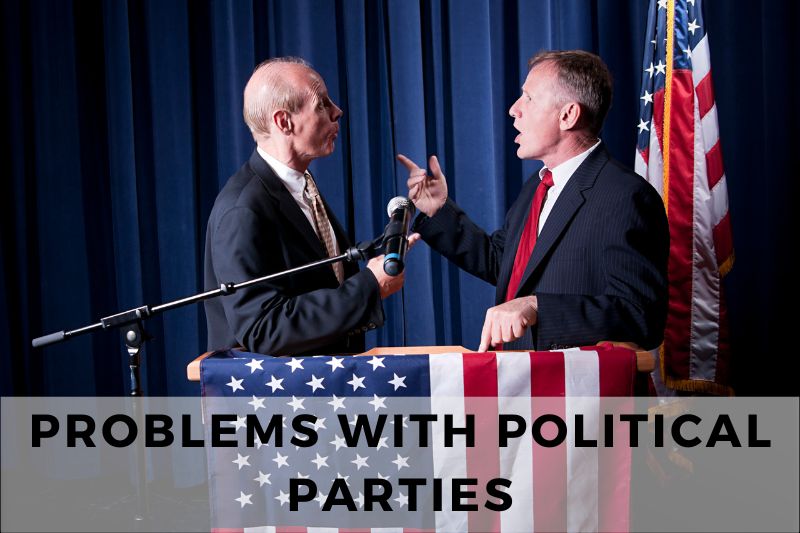
Political polarization has become increasingly prevalent in democracies, fueled by partisan media, identity politics, and ideological extremism. This polarization fosters a climate of hostility and distrust, inhibiting constructive dialogue and cooperation between opposing parties. As polarization intensifies, finding common ground and achieving consensus becomes increasingly challenging. Consequently, governance becomes gridlocked, and vital issues remain unresolved, to the detriment of society as a whole.
#5. Lack Of Internal Democracy
Many political parties lack internal democratic practices, with leadership positions often determined through backroom deals or favoritism rather than transparent and fair elections. This lack of internal democracy erodes trust within the party ranks and diminishes accountability, leading to disillusionment among party members and undermining the legitimacy of party leadership. Moreover, without mechanisms for meaningful participation and representation, the party risks alienating its grassroots base and weakening its democratic credentials.
#6. Short-Term Electoral Focus
Short-term electoral focus plagues many political parties, as they prioritize winning immediate elections over long-term policy planning and governance. This focus on short-term gains often results in populist policies and pandering to voter sentiment rather than addressing complex societal challenges. Consequently, parties may sacrifice strategic vision and responsible policymaking for electoral success, jeopardizing the long-term interests of the nation.
#7. Fragmentation And Coalition Politics
Fragmentation and coalition politics are prevalent in multi-party systems, leading to unstable governments and compromised policymaking. In such systems, no single party typically commands a parliamentary majority, necessitating alliances and compromises to form governing coalitions. However, these coalitions often consist of ideologically diverse parties with competing agendas, resulting in policy gridlock and inconsistency. Moreover, frequent changes in coalition dynamics can lead to political instability and hinder effective governance.
Closing Thoughts
In conclusion, the challenges facing political parties in democracies are multifaceted and consequential. From ideological inconsistencies to the influence of money in politics, these problems undermine the integrity and effectiveness of democratic governance. Addressing these issues requires concerted efforts to promote transparency, inclusivity, and accountability within political parties.
By strengthening internal democracy, fostering ideological coherence, and mitigating the influence of vested interests, we can uphold the principles of democracy and ensure that political parties serve the interests of the people they represent. Only through sustained reform and vigilance can we safeguard the vitality and legitimacy of democratic systems.